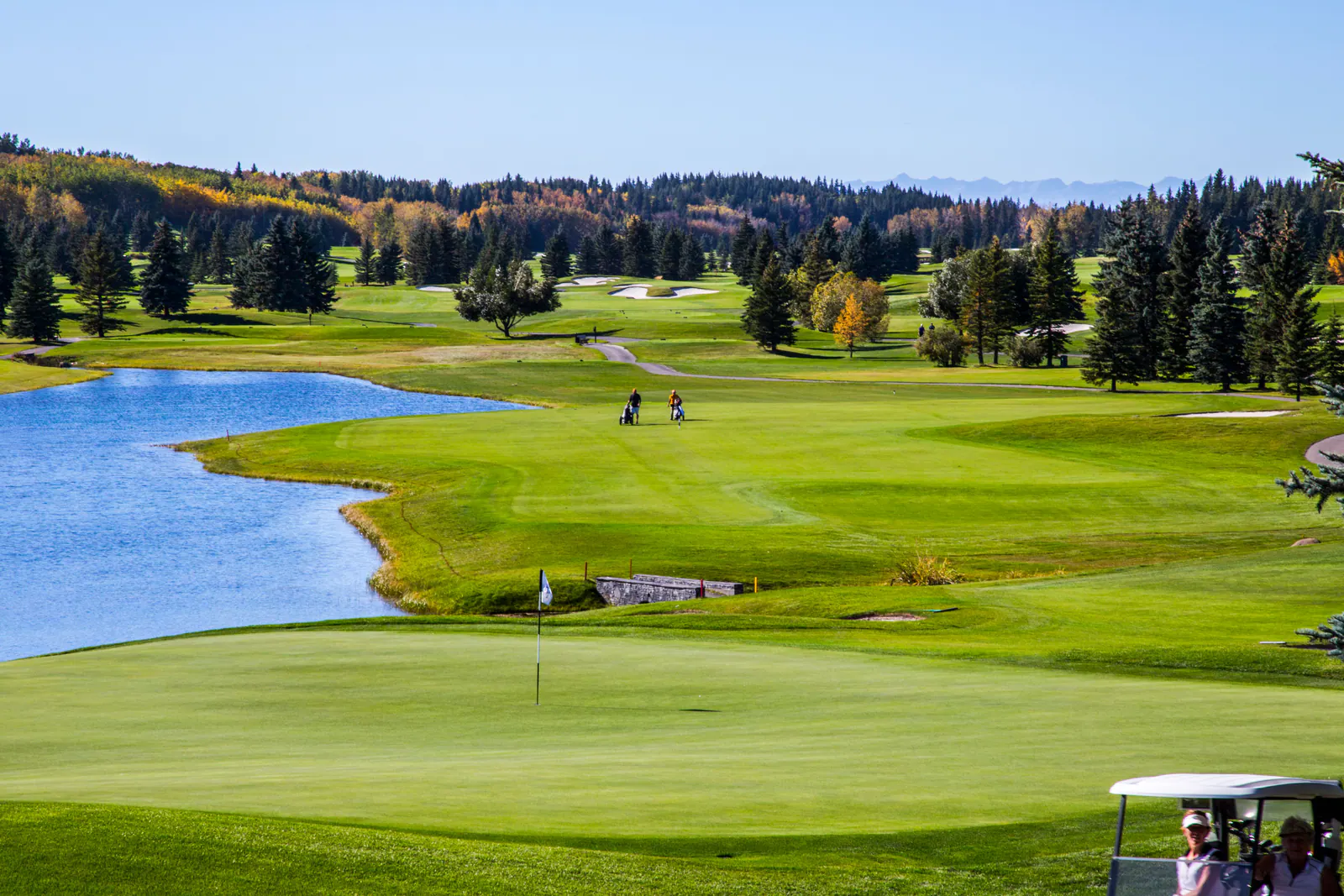
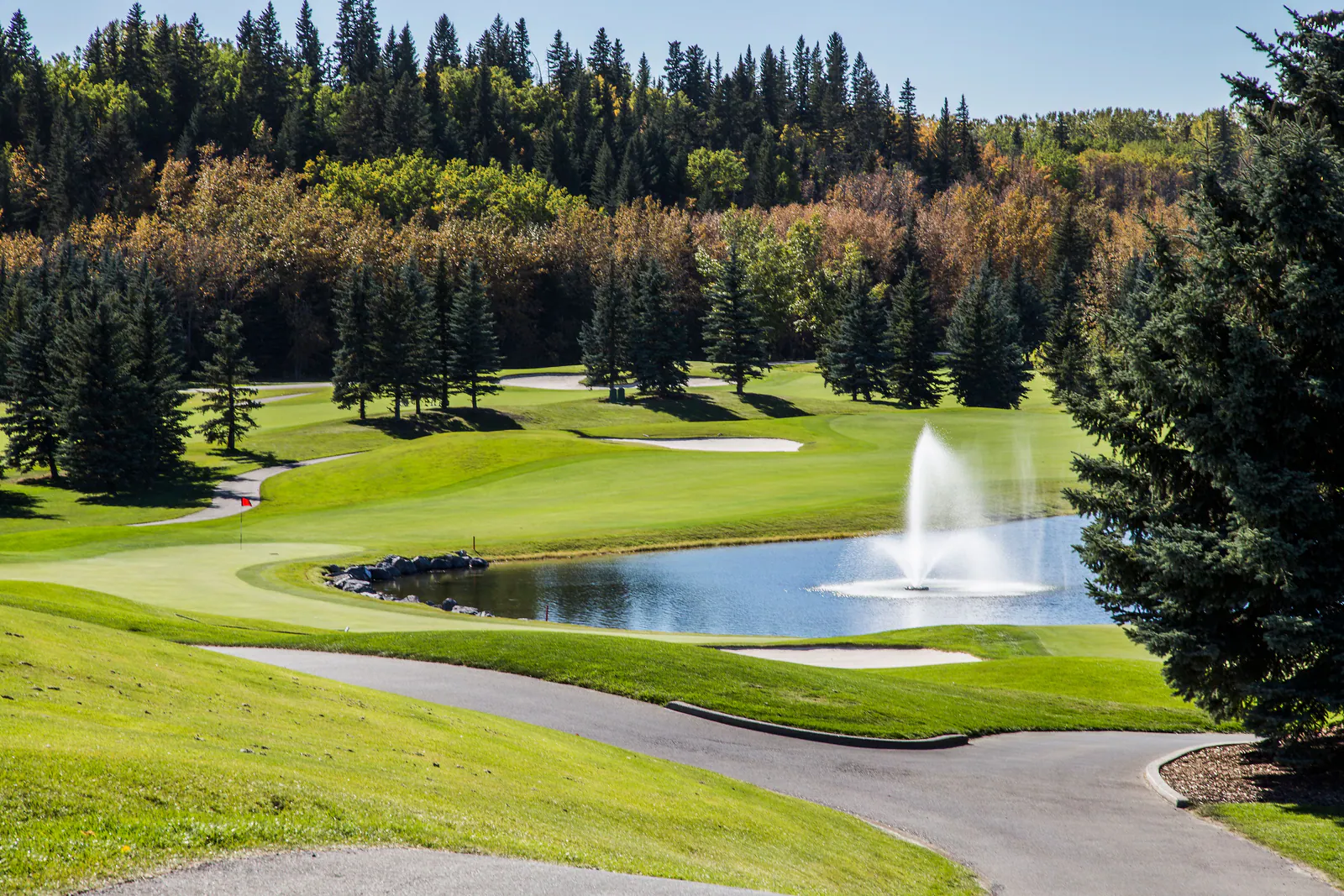
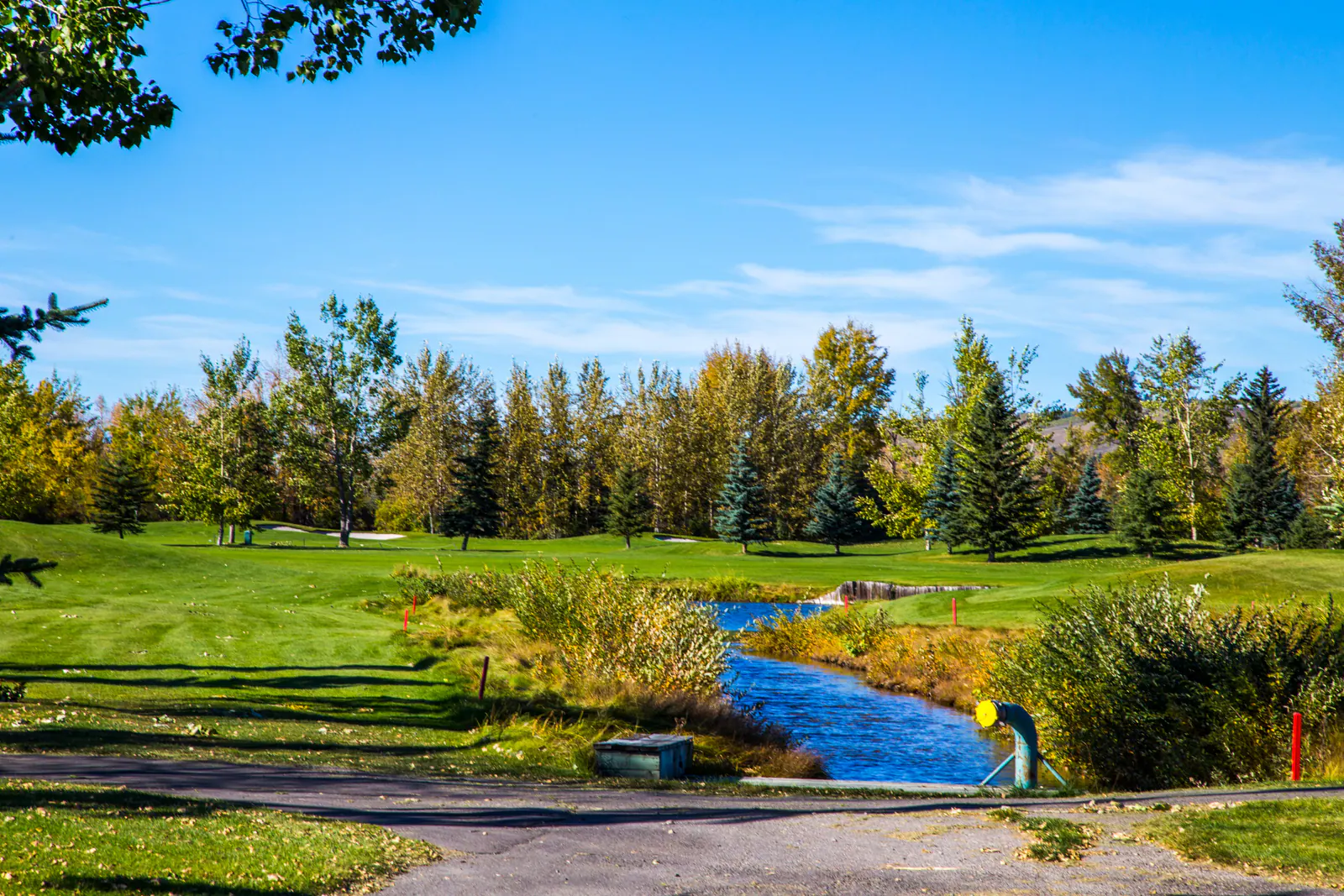
Estate enclaves, lakes and fairways along the Highway 8 corridor, minutes from the city's southwest edge.
The Elbow Valley property briefing
Understand the estate. Then understand the parcel.
Make the property review specific: the authority, the installed services, the owner responsibilities and the life you want to build here.
01
The home and the shared arrangements
Treat the parcel, the current municipal rules and any private estate arrangements as separate parts of the review. An appealing common landscape does not explain the obligations attached to an individual home.
Ask before committing
Which registered instruments, association obligations and service arrangements apply to this parcel?
Request for the file
Current title instruments, applicable agreements, fee information and the contact who can explain them.
Record the water and wastewater providers, the equipment on the property and any private responsibilities. Do not replace that information with an assumption about all homes in the area.
Ask before committing
What is supplied, who maintains it and which current charges or obligations belong to the owner?
Request for the file
Provider information, dated bills and relevant maintenance or service agreements.
Before planning a garage, suite or landscape change, identify the actual municipal and private approvals that may be relevant. Flood and drainage questions deserve their own site-specific review.
Ask before committing
What current district, instruments and site constraints must be reviewed for my exact proposal?
Request for the file
Municipal direction, current survey and appropriate professional drainage or design advice.
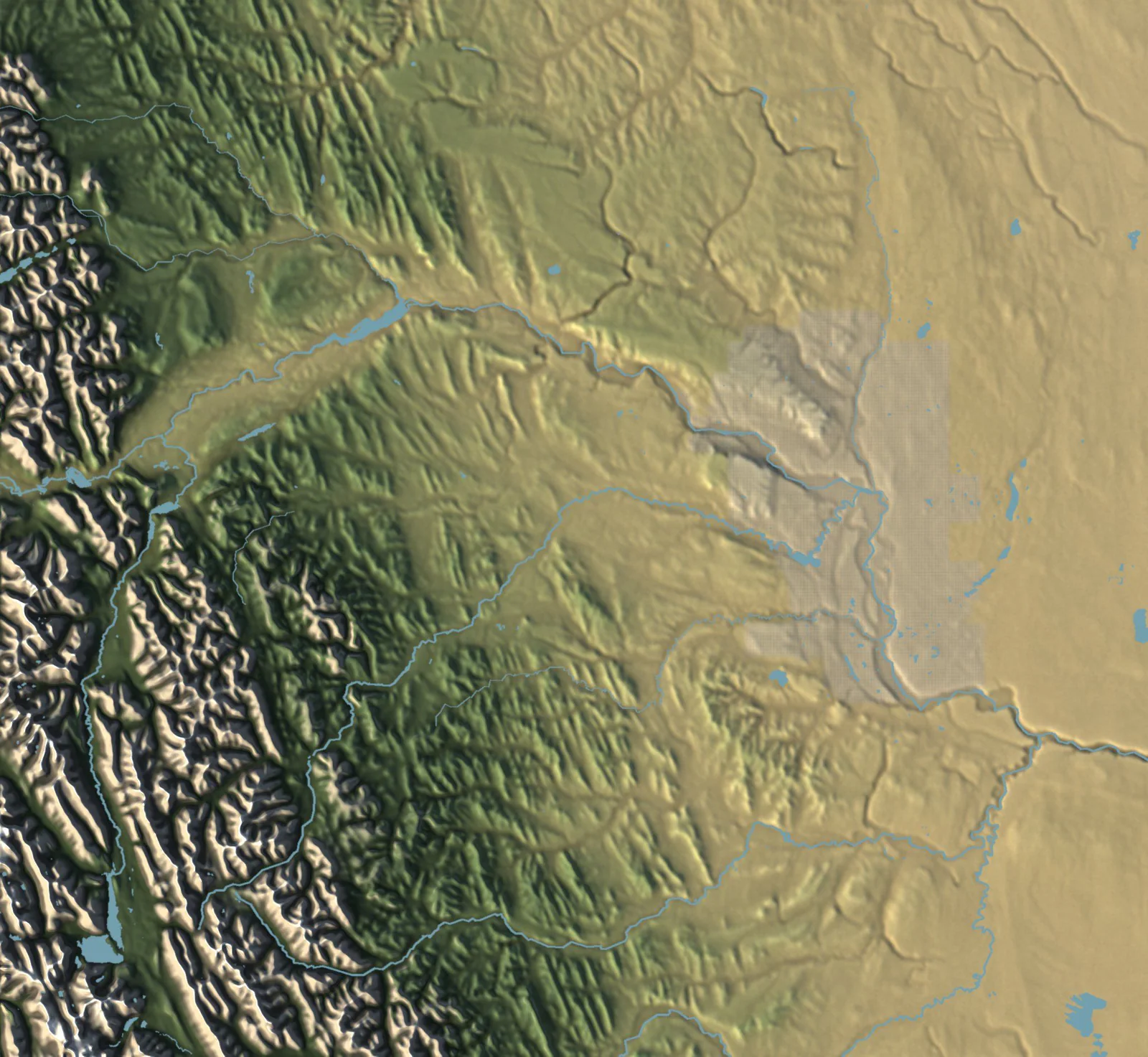
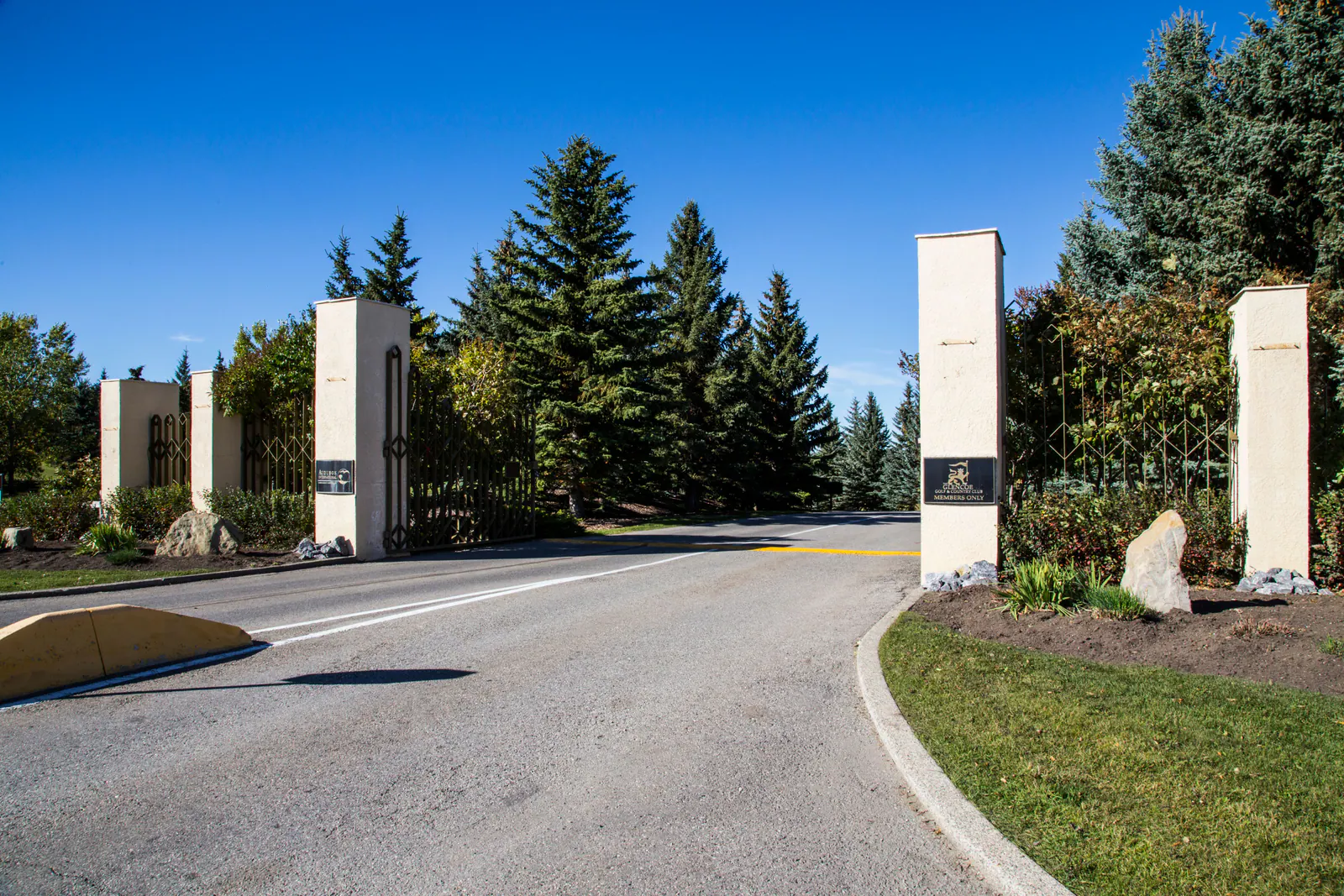
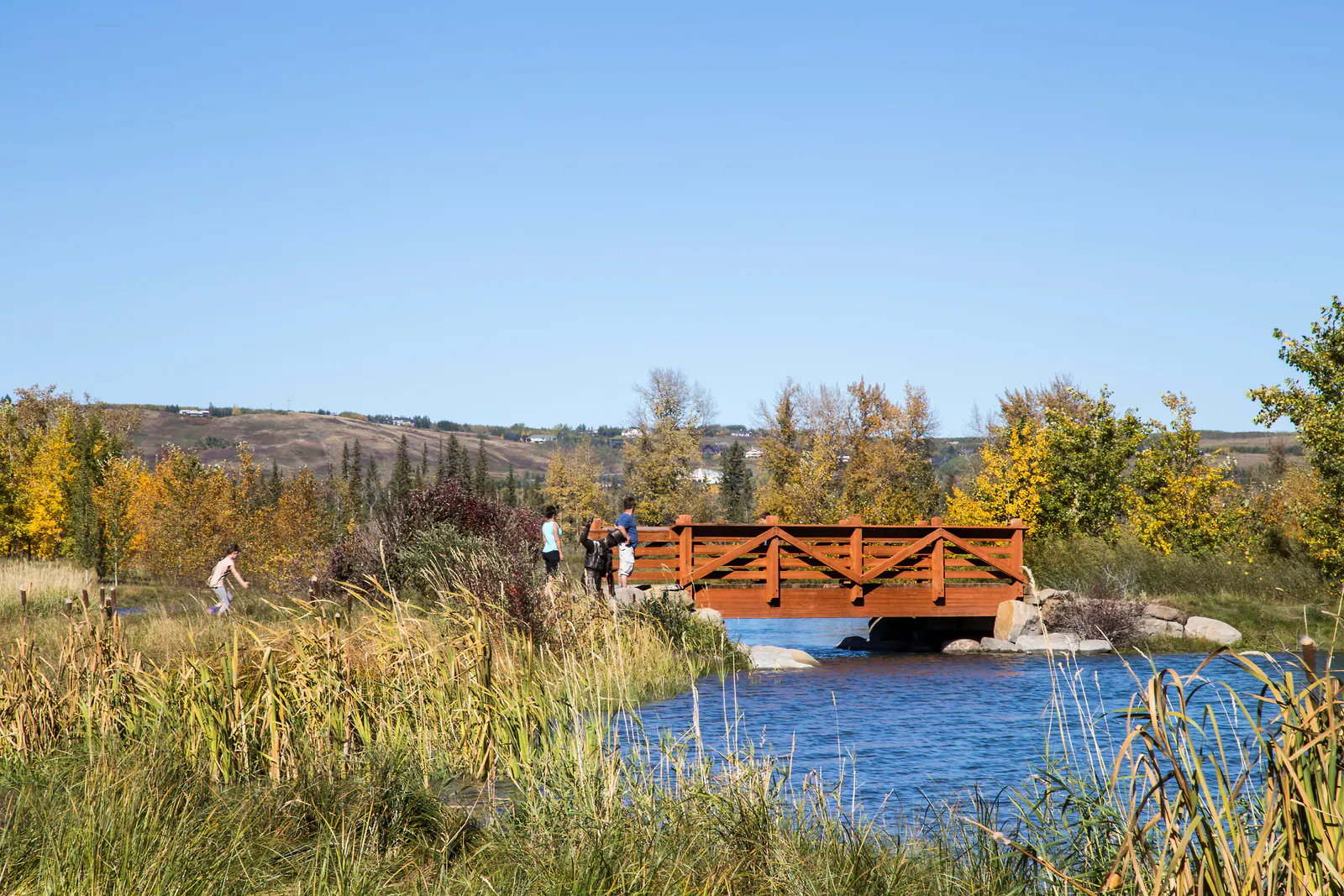
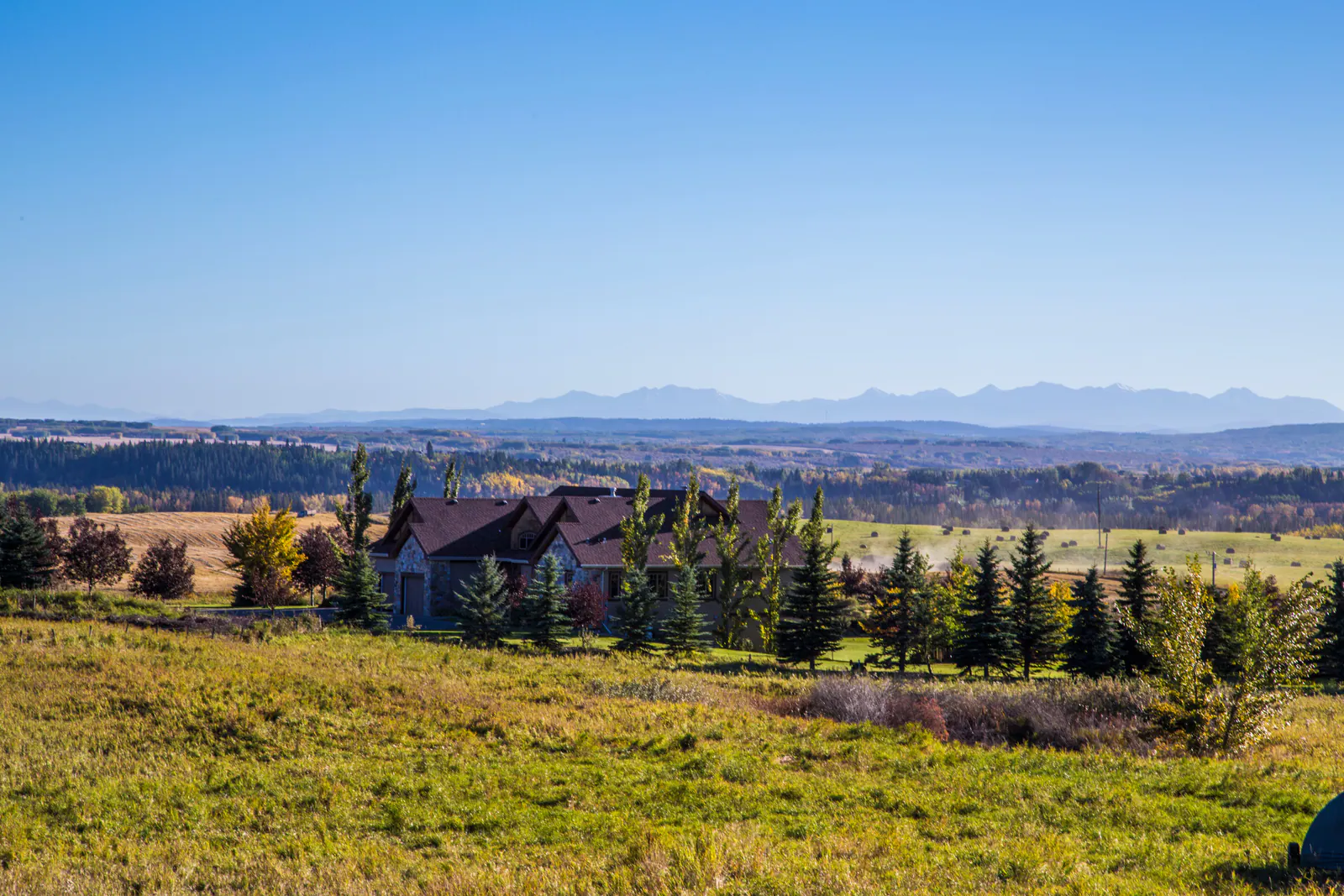
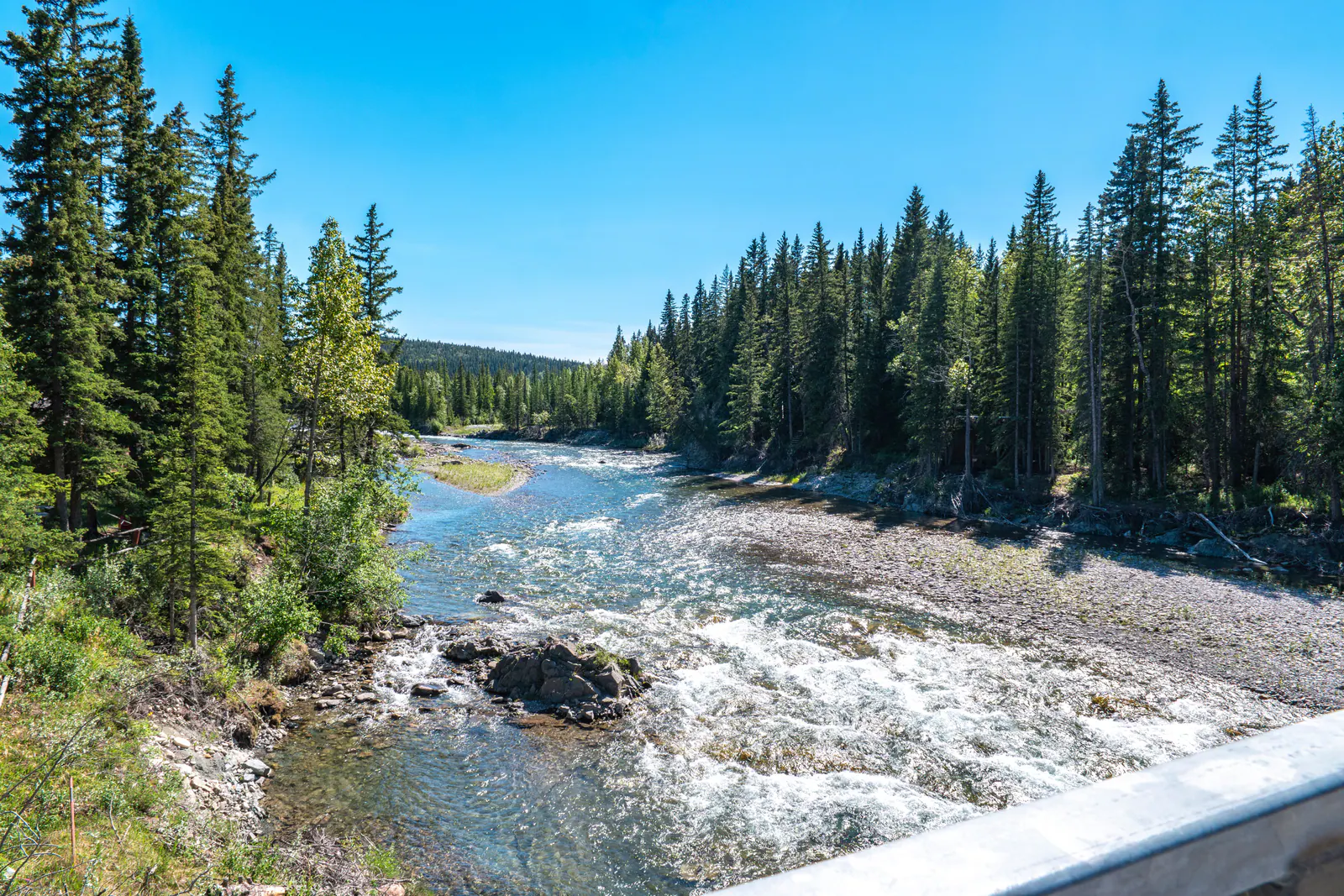
Elbow Valley is a residential area of Rocky View County west of Calgary along Highway 8, close to the city's southwest communities. It is not an incorporated hamlet. The landscape mixes planned estate neighbourhoods around water and golf with larger treed parcels toward the Elbow River.
At about 23 minutes by road from downtown, it is one of the closest acreage areas to the city, which makes it a natural choice for families who want land without giving up school runs and city amenities. Its terrain varies by about 180 m within five kilometres, from river flats to wooded upland.
Land use and parcels
Most acreages here fall in one of two Rocky View County districts under Land Use Bylaw C-8000-2020: R-RUR Residential, Rural, with a minimum parcel of 1.6 ha (3.95 ac) and room for limited agricultural pursuits, or R-CRD Residential, Country Residential, with a minimum of 0.8 ha (1.98 ac) for smaller parcels. Larger holdings are often in the agricultural districts A-GEN or A-SML (minimum 20.2 ha / 49.92 ac).
Livestock is permitted in R-RUR and R-CRD, scaled by parcel size: none below 1.4 ha (3.46 ac), two animal units from 1.4 to 2.0 ha, and more as the parcel grows. One horse is one animal unit. See the full table.
Some Elbow Valley neighbourhoods are comprehensively planned, with architectural controls, residents' associations and shared amenities that sit on top of the county's rules. Ask for the governing documents and fees along with the title.
What to check in Elbow Valley
Residents' association documents, fees and architectural guidelines where they apply
Proximity to the Elbow River and the current provincial flood map
Water and wastewater servicing: private systems or shared infrastructure
The land use district for any planned additions or outbuildings
Property tax
Rocky View County's 2026 total residential rate is 4.8048 mills — about $4,805 a year per million dollars of assessment — compared with 6.6499 mills in the City of Calgary. Compare counties.
Pricing in Elbow Valley
Alberta has no public register of sale prices, and acreage-only statistics are not published, so this guide does not quote acreage prices. For recent comparable residential acreage sales, ask Dusko directly.
For context only: CREB's August 2026 report for its Rocky View Region — all residential property types, including towns such as Cochrane, not acreages alone — shows 152 sales, a benchmark price of $785,200 and 4.15 months of supply. Source: CREB.
From interest to evidence
Your Elbow Valley viewing file
Keep the address, your essential plans and the questions that remain open in one place. Use these stages as a starting point for your own property review.
01
Before the viewing
Begin with the legal parcel and the decisions essential to your purchase.
Which registered instruments, association obligations and service arrangements apply to this parcel?
Request: Current title instruments, applicable agreements, fee information and the contact who can explain them.
Write down your essential residential plans and the evidence still missing.
02
At the property
Use the visit to identify questions for the right professionals.
What is supplied, who maintains it and which current charges or obligations belong to the owner?
Record the approach, installed services and improvements with the owner’s permission.
Ask who can supply: Provider information, dated bills and relevant maintenance or service agreements.
03
Before a contractual decision
Review findings against the actual agreement with your agent, lawyer and qualified specialists.
What current district, instruments and site constraints must be reviewed for my exact proposal?
Obtain: Municipal direction, current survey and appropriate professional drainage or design advice.
Keep unconfirmed uses, incomplete records and unpriced work visible; this guide sets no condition dates.
A field sheet to take with you.
Download the questions, blank notes, local references and seller checklist. No account or email required.
A working checklist, not a clearance. These questions and the downloadable sheet do not establish zoning, suitability, safety, insurance or approval to build or occupy. Information can be incomplete, inaccurate or out of date. Confirm the property and proposal independently before relying on them.
For residential acreage owners
Present the setting. Prepare the evidence.
A strong Elbow Valley listing helps buyers understand the home and the practical responsibilities that come with its land. Start with the records you can support.
Prepare the Elbow Valley owner file with the actual municipality, current records and dates. Do not infer a permission from an area name.
Document the service and owner-responsibility questions: What is supplied, who maintains it and which current charges or obligations belong to the owner?
Ask the listing team how to present the land and improvements accurately; unresolved questions about your next improvement belong in the file.
Use the private working tools to organise your own assumptions and records. The possibility planner can be inaccurate or incomplete; it is not a zoning determination or approval.
No. Elbow Valley is an estate-residential area of Rocky View County on both sides of Highway 8. It borders Calgary's western city limit at 101 Street SW, with the Tsuut'ina Nation reserve to its south, and it is not an official hamlet.
About 25 minutes by road in light traffic, roughly 21 to 30 km depending on whether you take Highway 8 or Stoney Trail. Weekday peak times will be longer.
Do Elbow Valley homes have residents' associations?
Some do. Parts of Elbow Valley are comprehensively planned, with architectural controls, residents' associations and shared amenities that sit on top of Rocky View County's rules. Ask for the governing documents and fees along with the title.
How do I check flood mapping for an Elbow Valley property?
Look the parcel up on Alberta's Flood Awareness Map, which shows the floodway and flood fringe for the 1:100 design flood where the province has mapped them. Then ask Rocky View County how its land use bylaw treats those zones. Read the flood guide.
Alberta is a non-disclosure province, so there is no public sale-price register to quote for Elbow Valley. For recent comparable sales, ask Dusko Sremac, an Alberta REALTOR® with the Real Estate Partners Team at Real Broker.
Does an estate name tell me the rules for every home?
No. Check the individual parcel, current municipal documents and any applicable registered or private agreements.
Can an online planner approve a project in Elbow Valley?
No. Supplied measurements, district notes and conceptual drawings may be inaccurate or incomplete. Confirm the actual parcel, current requirements and proposal with the relevant authority and qualified professionals.
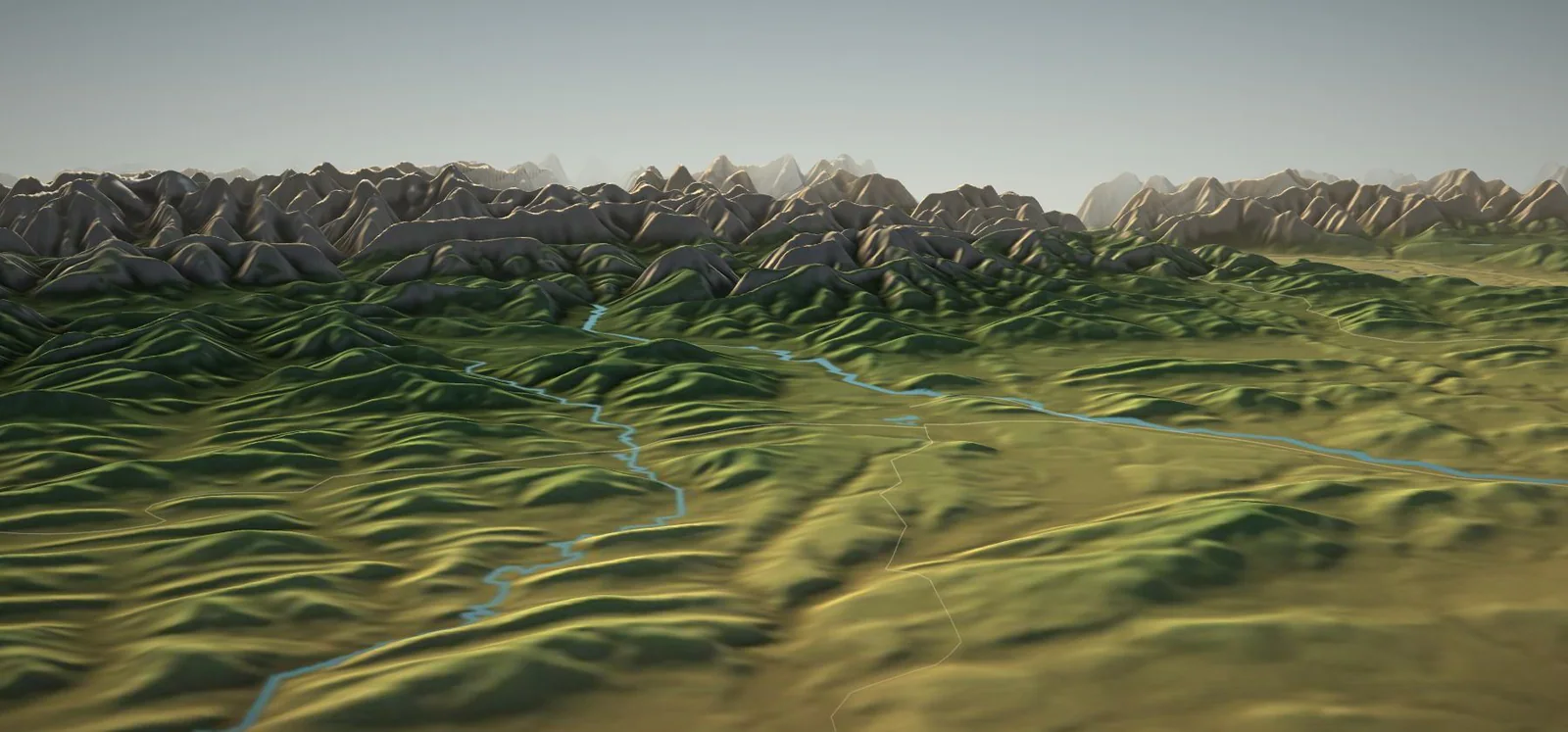
The view from here
The skyline west of Elbow Valley.
From high ground near the centre of Elbow Valley, 110 named peaks are in line of sight — the farthest, The Elevators, 112 km away.
On the winter solstice the sun leaves Elbow Valley about 12 minutes before the official sunset: at 5:21 pm rather than 5:32 pm. On the summer solstice the gap is about 5 minutes. The longest gap of the year is about 15 minutes, around January 19.
The bold line is a nine-day average of direct sun lost each day, the time from the last moment the sun clears the skyline to the official sunset; the faint line is each single day. Both solstices and equinoxes are marked with that day's exact figure. The sun can slip behind a peak and reappear; this is the final loss of the day. Computed for the same high-ground viewpoint as the skyline above, bare earth only, so trees, buildings and a lot in a valley lose more. Alberta will keep Alberta Time (ABT, UTC−6) through November 2026 and the winter, with no autumn clock reset. This 2026 model uses the former standard time (UTC−7) before March 8 and UTC−6 from that spring change onward. Clock labels do not change the calculated minutes of sun lost to the skyline. How this is computed, and every region compared.
Official sunset against the last direct sun, Elbow Valley, 2026 clock times
Date
Official sunset
Direct sun ends
Lost
Where the sun goes
Winter solsticeDecember 21
5:32 pm
5:21 pm
12 min
south-west (230°), behind a ridge about 13 km away
Spring equinoxMarch 20
7:50 pm
7:42 pm
9 min
west (270°), in line with Mount Skogan North Peak (2,628 m, 59 km)
Summer solsticeJune 21
9:55 pm
9:51 pm
5 min
north-west (310°), behind a ridge about 16 km away
Autumn equinoxSeptember 22
7:35 pm
7:26 pm
8 min
west (269°), in line with Mount Skogan North Peak (2,628 m, 59 km)
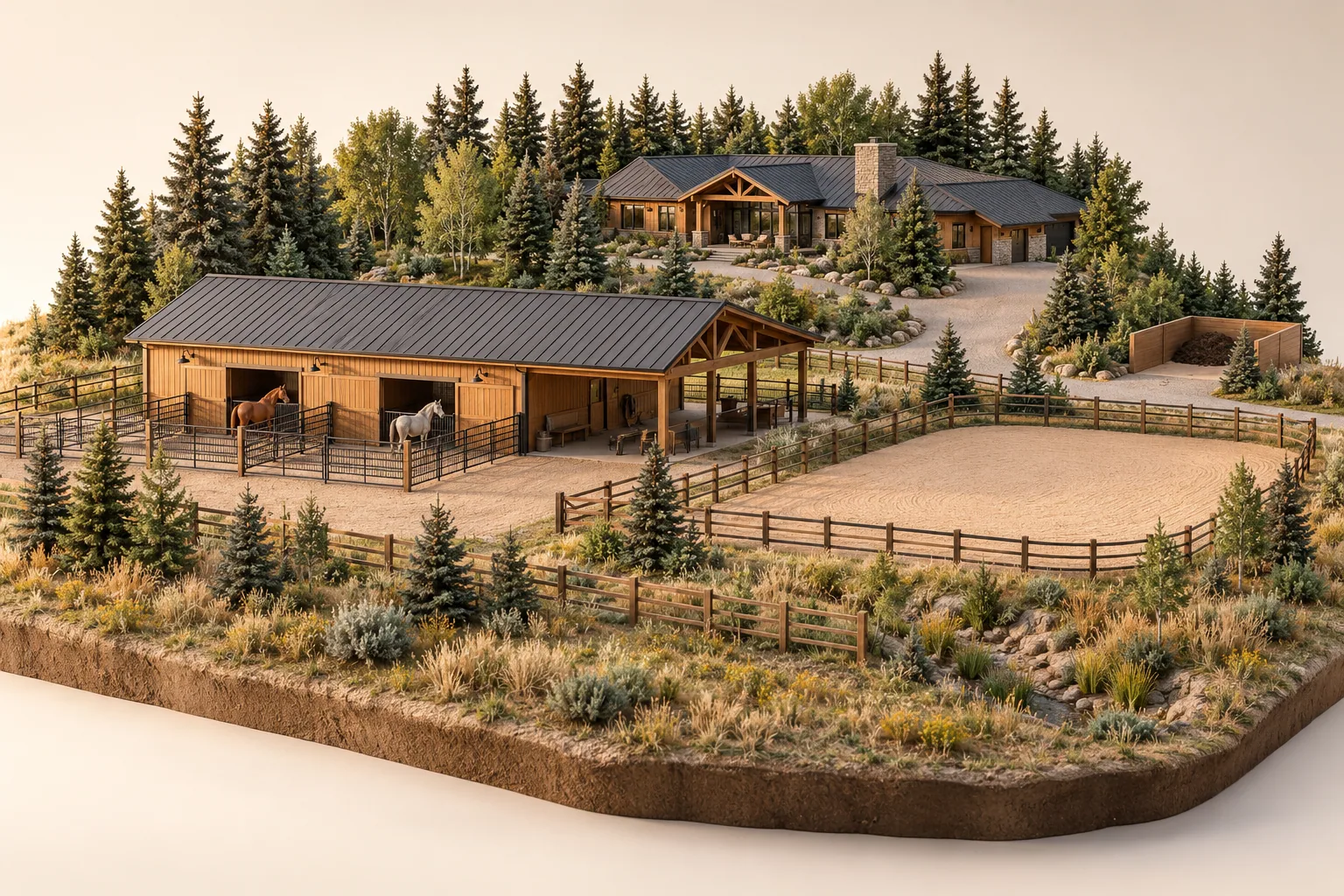
Think through turnout, access, shelter, daily care and the relationship to the home. Horse facilities and permitted uses need property-specific review.
Open full image ↗A country life with horsesThink through turnout, access, shelter, daily care and the relationship to the home. Horse facilities and permitted uses need property-specific review.Concept illustration · not a property survey, approved layout or listing photograph.
Private consultation
Buying or selling in Elbow Valley?
Tell Dusko about your residential acreage or the country home you are looking for. Conversations are confidential and there is no obligation.
Dusko represents residential acreages and country homes. Abby Cline leads our rural program alongside Jenn Allen; both are licensed in residential and rural real estate with Real Estate Partners Team at Real Broker.