
Alberta registers land under the Torrens system: the province holds the original titles, documents and plans and is legally responsible for their validity. What is registered on title is, in most cases, what binds the land.
- Title system
- Torrens
- RPR prepared by
- Alberta Land Surveyor
- RPR expiry
- None — but it dates
- Central RPR registry
- None
Reading the title
A current copy of title, ordered through the province's SPIN2 system, lists the registered owner, the legal land description and every instrument registered against the land: mortgages, caveats, easements, utility rights-of-way, restrictive covenants and, sometimes, development agreements. Since amendments in 2020, a pending registration queue guarantees priority on submission, which is why transactions can close before registration is complete.
On a country property, expect more instruments than in the city. Each one is a short document worth reading in full rather than by its title line.
The Real Property Report
A Real Property Report (RPR) is a legal document prepared by an Alberta Land Surveyor showing the property's boundaries and the location of visible improvements — buildings, decks, fences — relative to them, together with registered easements and rights-of-way. Municipalities commonly review an RPR for compliance with the land use bylaw.
An RPR doesn't expire, but it goes out of date the moment something is built, moved or removed. There is also no central database of RPRs, so the one in the seller's drawer may be the only copy. On acreages, the shop, the barn, the fence lines and the second driveway are exactly the improvements that tend to postdate the last report.
Easements and rights-of-way
Easements and rights-of-way for utilities, roads and shared access are common on rural land and are registered on title. Holders such as utility companies may enter to maintain their infrastructure, often without prior notice. Before you plan a shop, a tree line or a riding arena, find where every registered corridor runs on the ground.
Caveats
A caveat gives notice of an interest someone claims in the land — an unregistered agreement, a right of first refusal, a builder's lien. Land Titles publishes forms and information sheets for registering, discharging and lapsing caveats. On a purchase, your lawyer will want each one either discharged or understood before closing.
The road and the approach
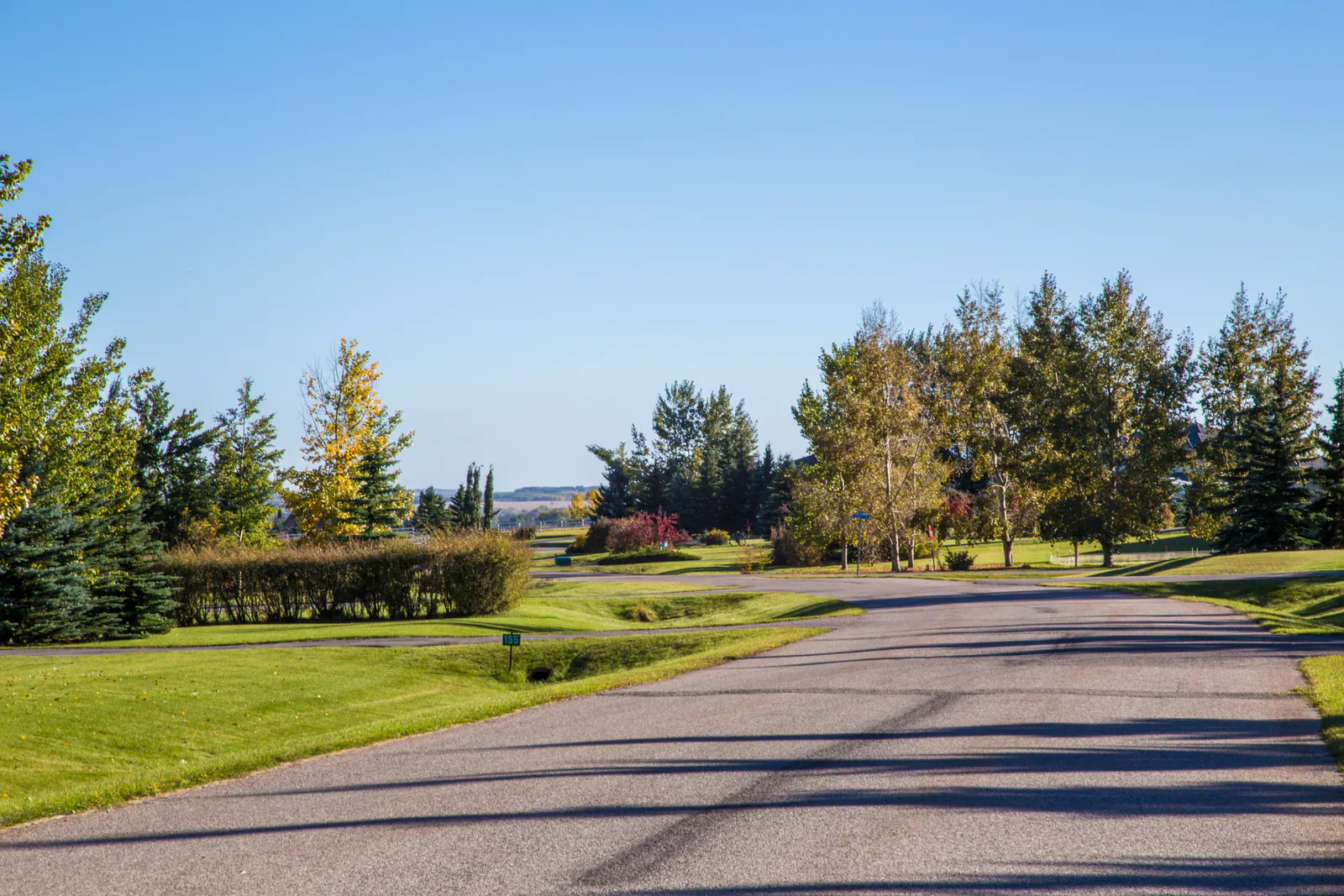
Access is a legal question and a practical one. Legally, confirm the parcel fronts a public road or has a registered access easement, and that the approach from the road was permitted by the county. Practically, ask who maintains the road, how it is cleared in winter, whether school buses run it, and how the driveway behaves in a spring thaw. A shared private road deserves a written road-maintenance agreement.
Your checklist
- Current copy of title with every registered instrument read
- A Real Property Report that shows the property as it stands today
- Location of each easement and right-of-way on the ground
- Caveats discharged or understood before closing
- Legal access and a permitted approach confirmed with the county
- Winter maintenance and any shared-road agreement
How Dusko uses this
Dusko asks sellers for a current RPR early — on acreages it is the document most often out of date — and reviews every registration on title with the client before an offer is written.